
Antislip
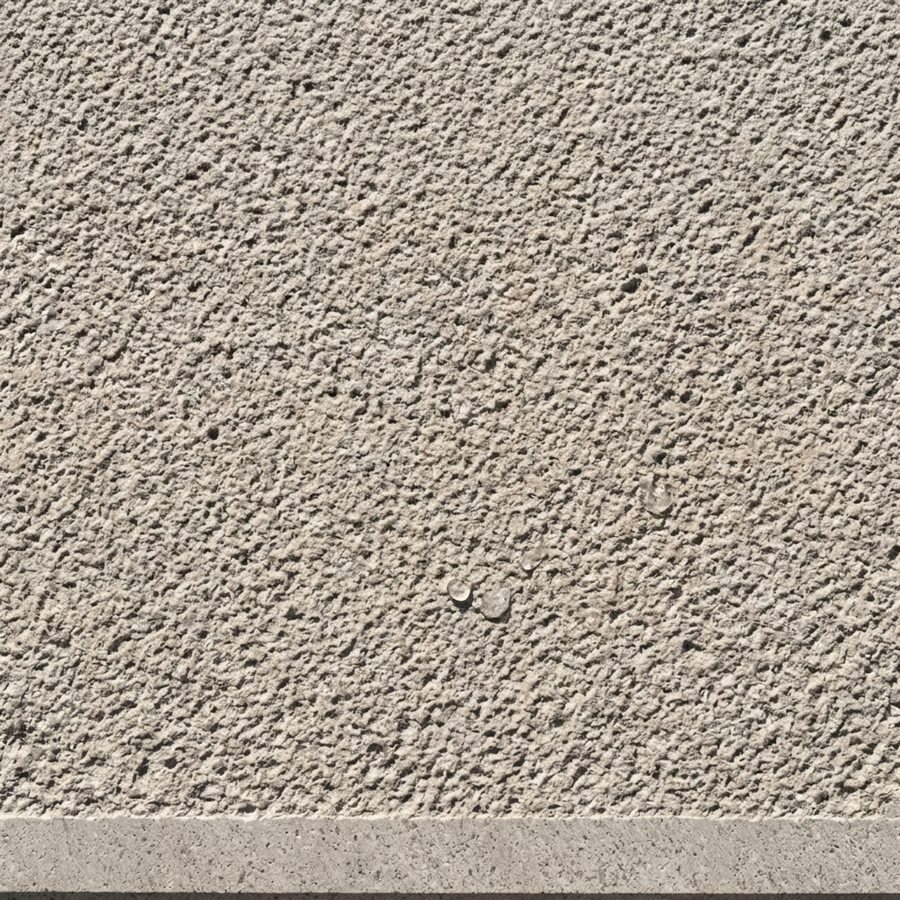
Antislip Basalt
A mechanically worked, fine-grained surface that sheds water sideways and keeps its grip when wet. The default answer for stairs, ramps, terraces and pool surrounds.
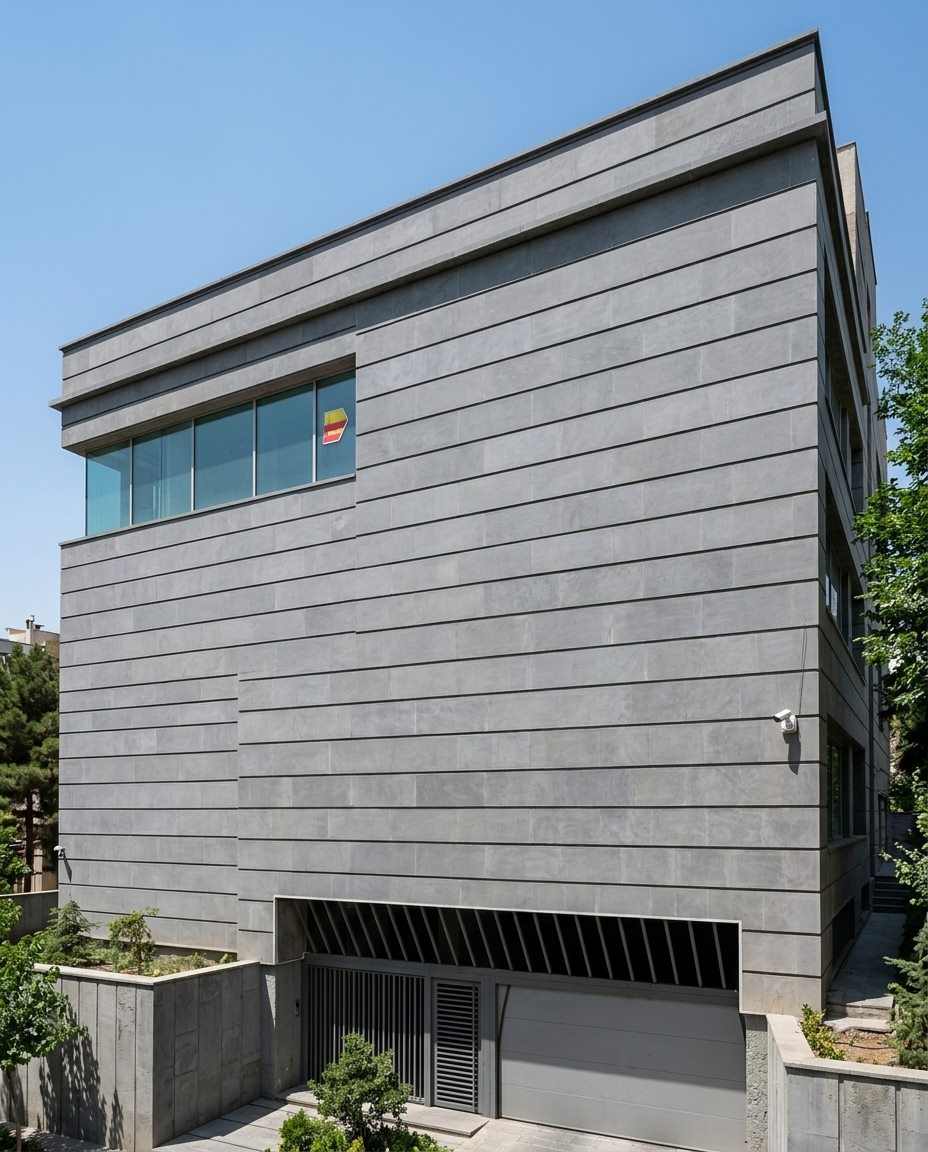
Volcanic stone quarried in Georgia, cut in our own workshop. Crack-resistant through freeze–thaw cycles, colour-stable under UV, and grippy underfoot when wet — for facades, stairs, terraces and yards.
That is the starting price for standard-format tiles. The final figure depends on the finish, the thickness and how many square metres you need — larger orders come down per metre. Cutting to size, non-standard formats and installation are quoted separately. We measure on site for free and give you an exact price before anything is cut.
Basalt cools fast underground, which gives it a dense, fine and even crystal structure. In practice that means very low water absorption — so the freeze–thaw cycle that splits softer stone leaves basalt intact. It is the reason a basalt facade in Tbilisi looks the same after ten winters as it did on handover day.
Each finish exists for a reason — a surface, a load and a place where it is the right answer. Below is which is which, and where we would put it.
A mechanically worked, fine-grained surface that sheds water sideways and keeps its grip when wet. The default answer for stairs, ramps, terraces and pool surrounds.
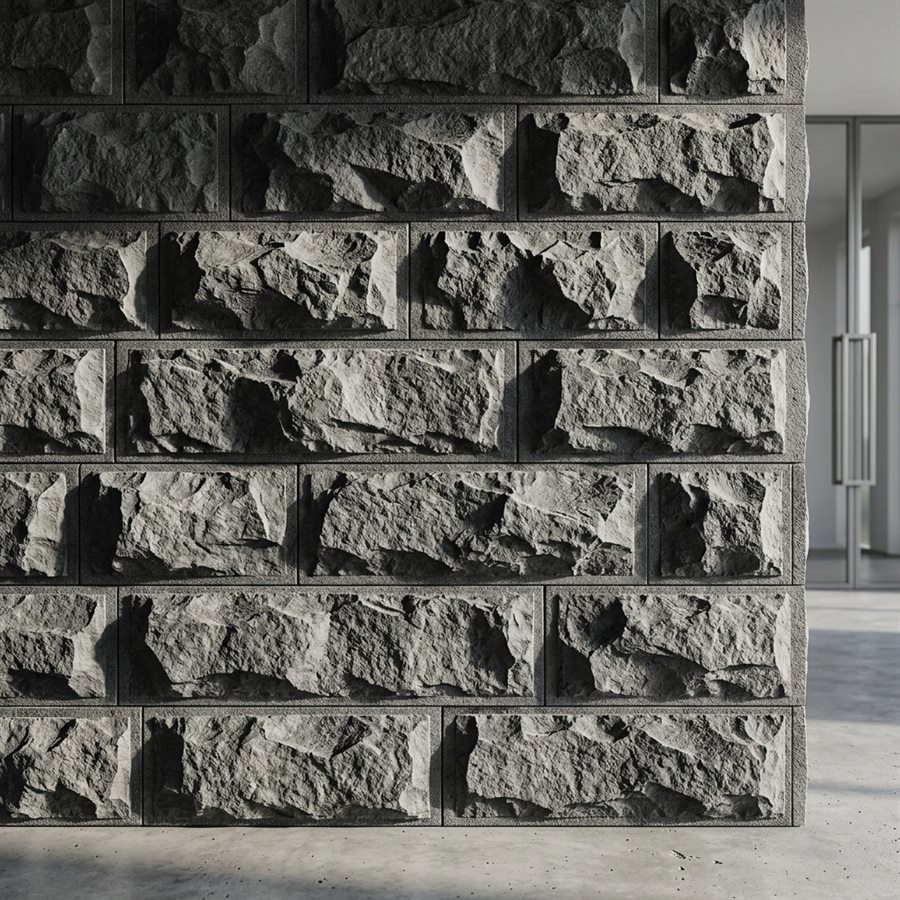
A split, three-dimensional face left exactly as the stone came out of the quarry. It gives a facade deep shadow and real weight — used on retaining walls, plinths and accent planes.
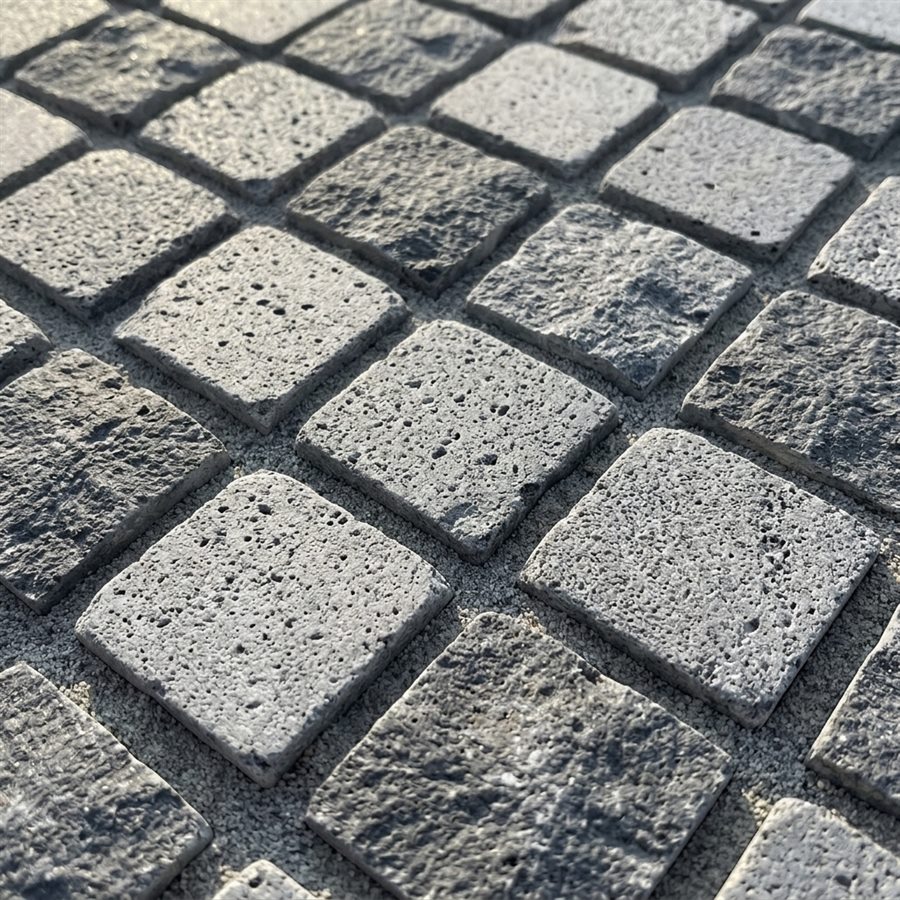
Cut setts with the characteristic vesicular pores of volcanic rock. Laid in fan, linear or random bond; they carry vehicle load and can be repaired one stone at a time.

Ground to a flat, matt surface with no shine at all. An even mid-grey that reads as one continuous plane across a whole elevation — the quiet choice for ventilated facades and interior floors.
Standard formats cover most projects. Anything outside them we cut to your drawing — including large planks for facades and stair treads in a single piece.
Large-format planks in aligned horizontal courses with continuous joints. Thickness selected with the substructure — thinner on ventilated systems, thicker where the stone is bonded.
Treads in one piece where the span allows, with an antislip face and a squared edge. Risers cut down from the same block so tone matches from step to step.
Terrace and yard paving in aligned courses, or cubes where vehicles run. Both can be lifted and relaid in sections, which matters over drainage and services.
Tell us the finish, the approximate square metres and the deadline. On business days we reply within 24 hours — with a specification and a lead time. Measurement on site is free.